
Search

1. Choose ‘specific surveys’ to build the metric.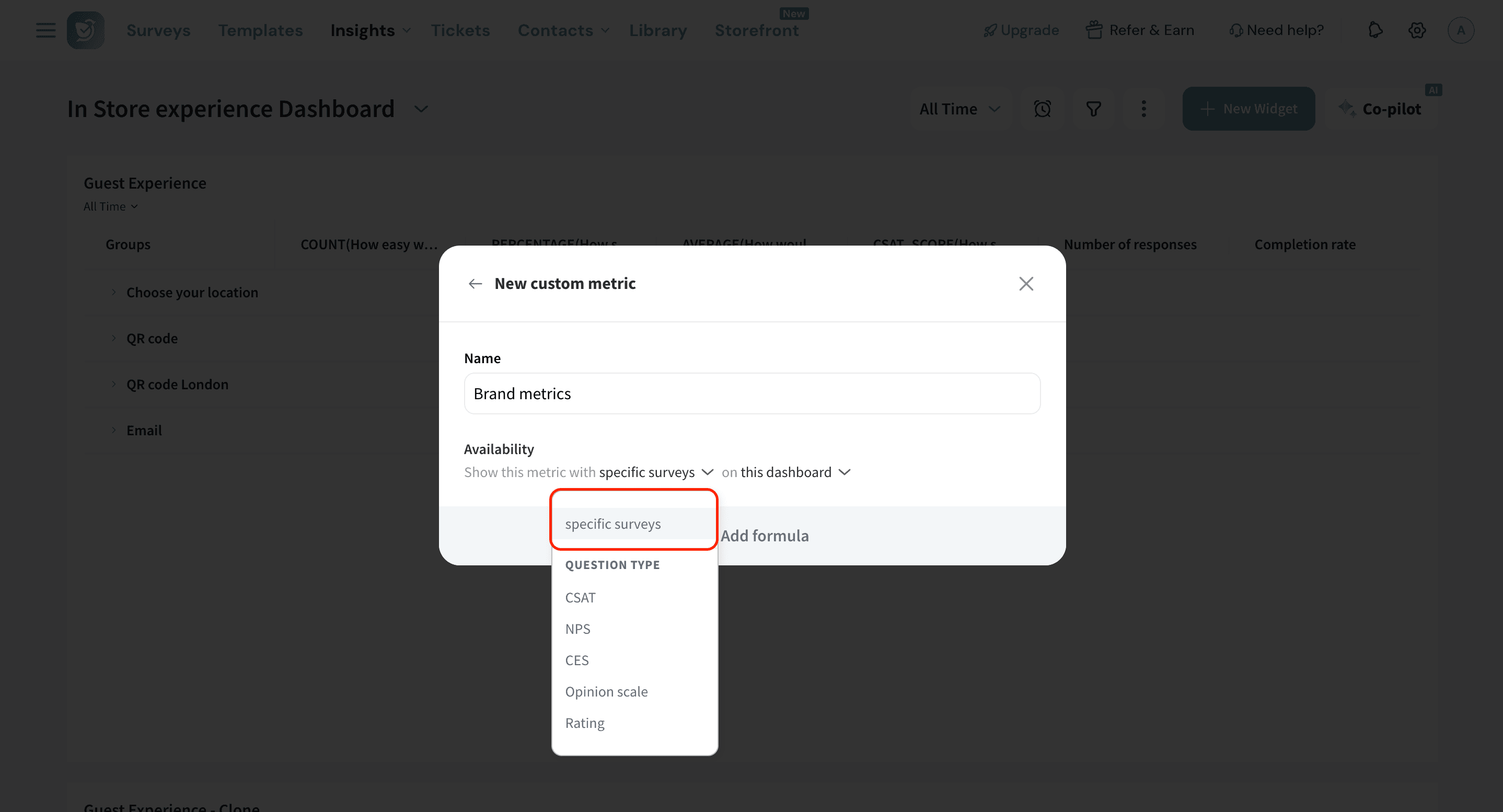
2. Set the availability of the custom metric to the current dashboard or have it accessible across all your dashboards.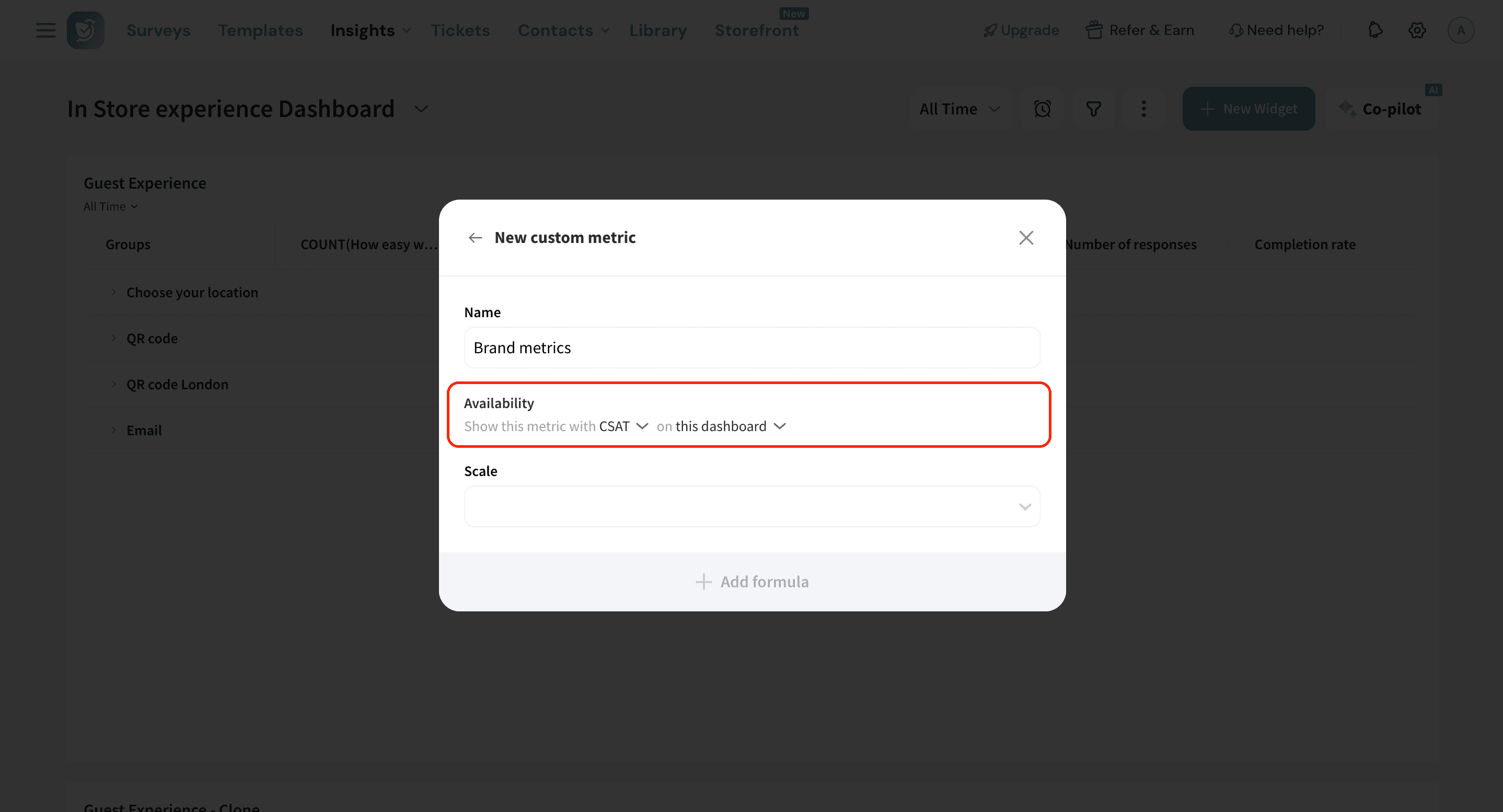
3. Click Add formula.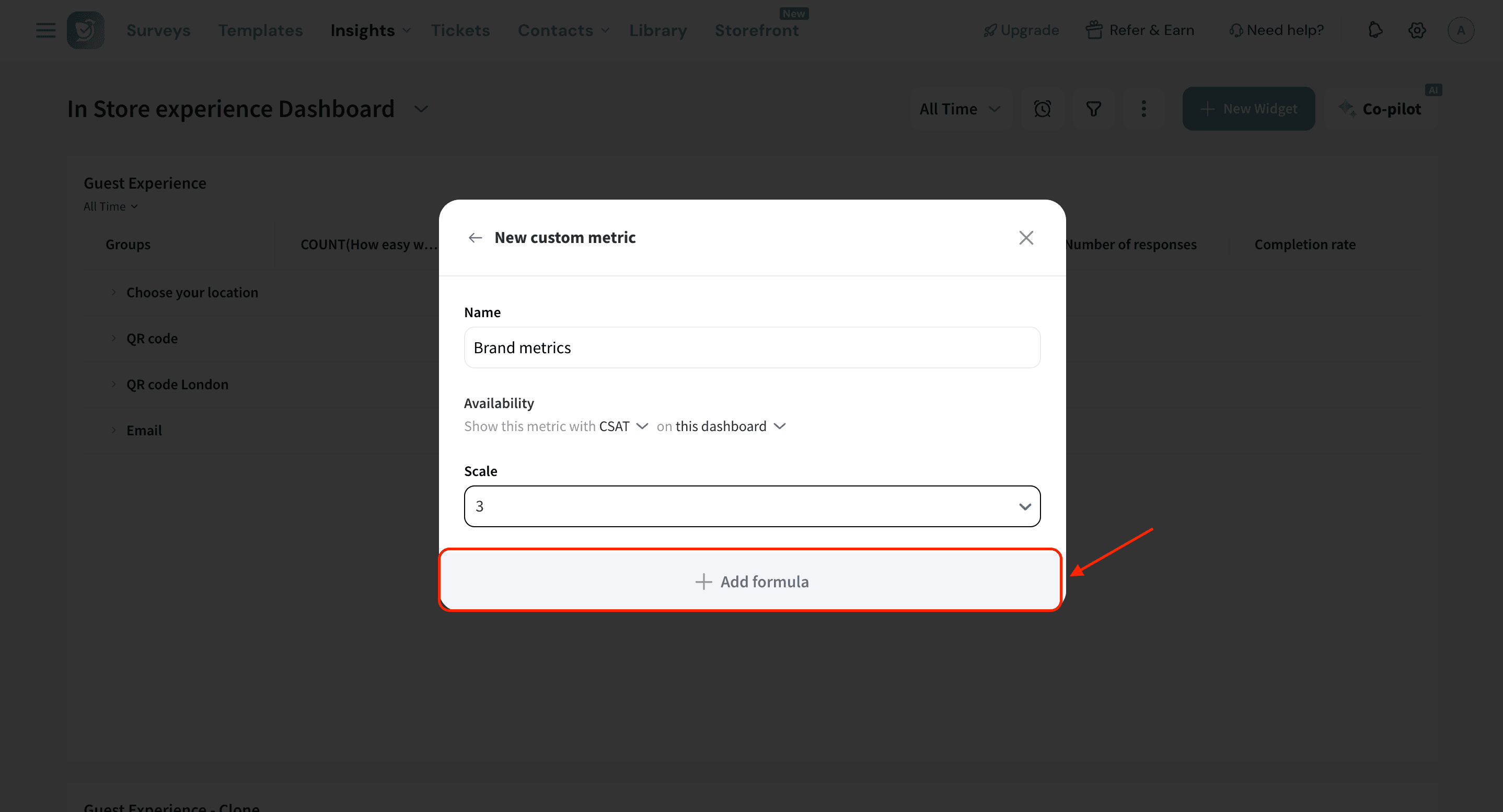
4. Type ‘f’ or click the Add function to start building the formula for your custom metric.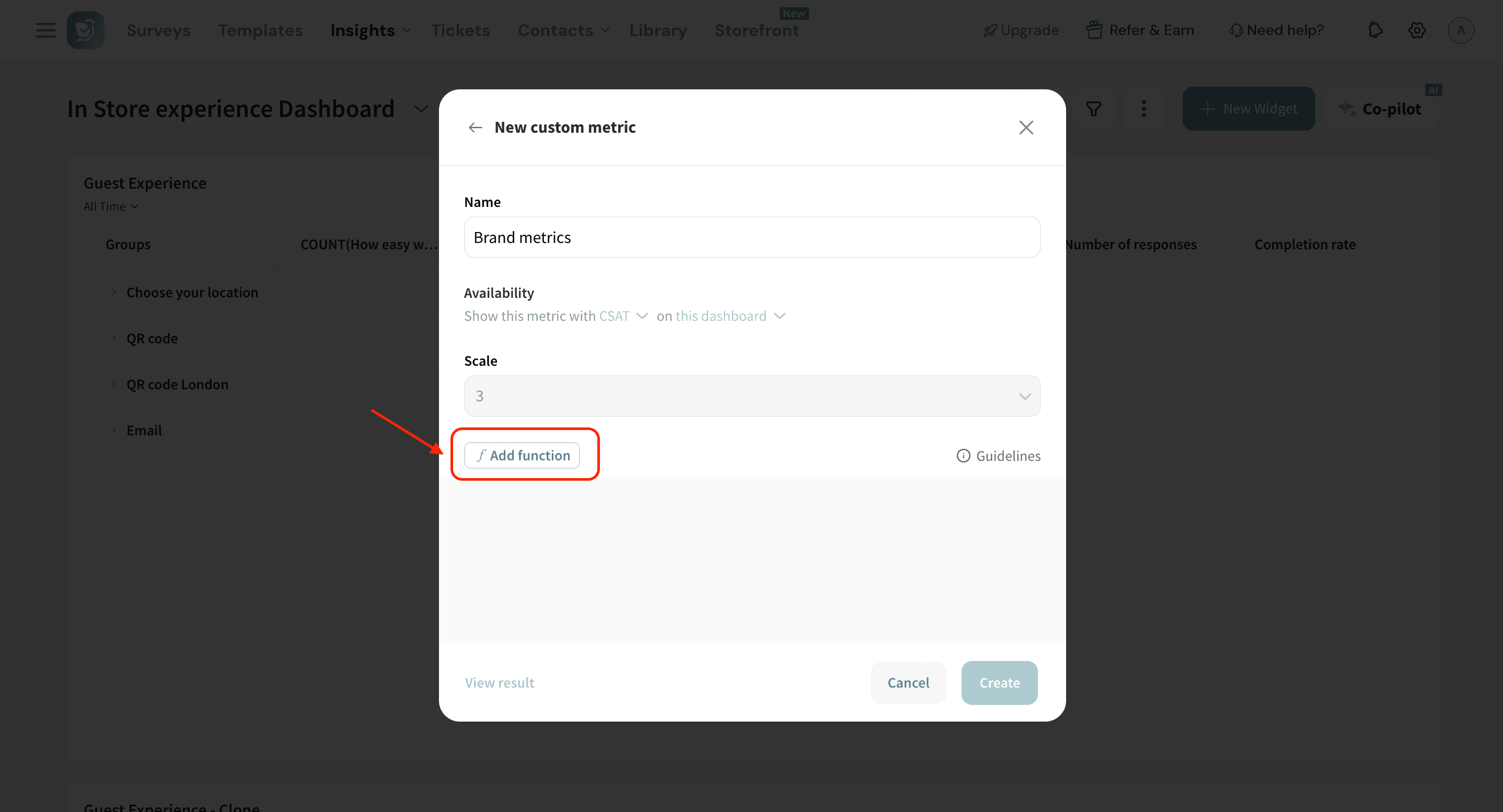
5. Choose one from the available functions to get started with building the formula.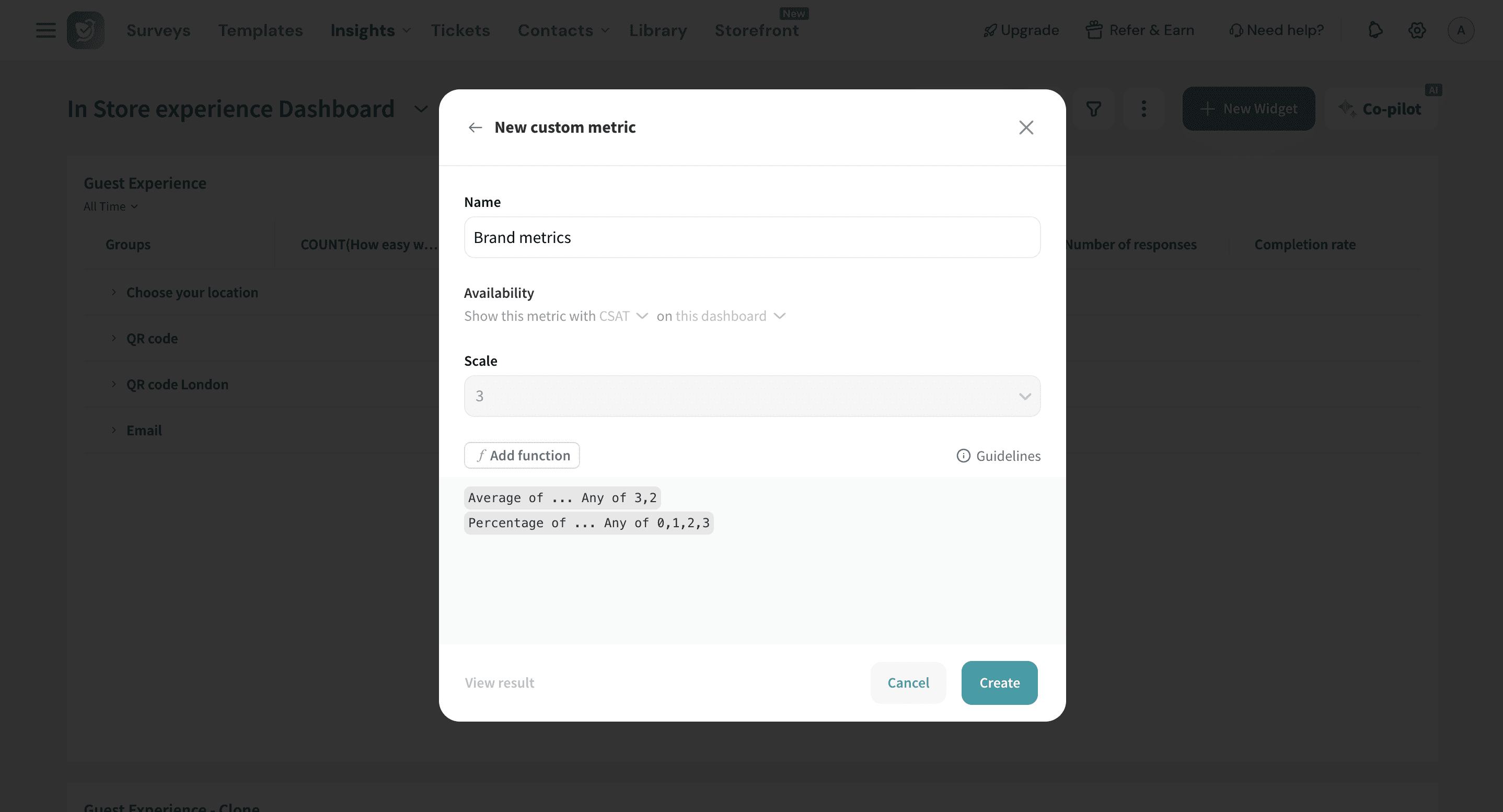
6. Choose a survey to access a specific question.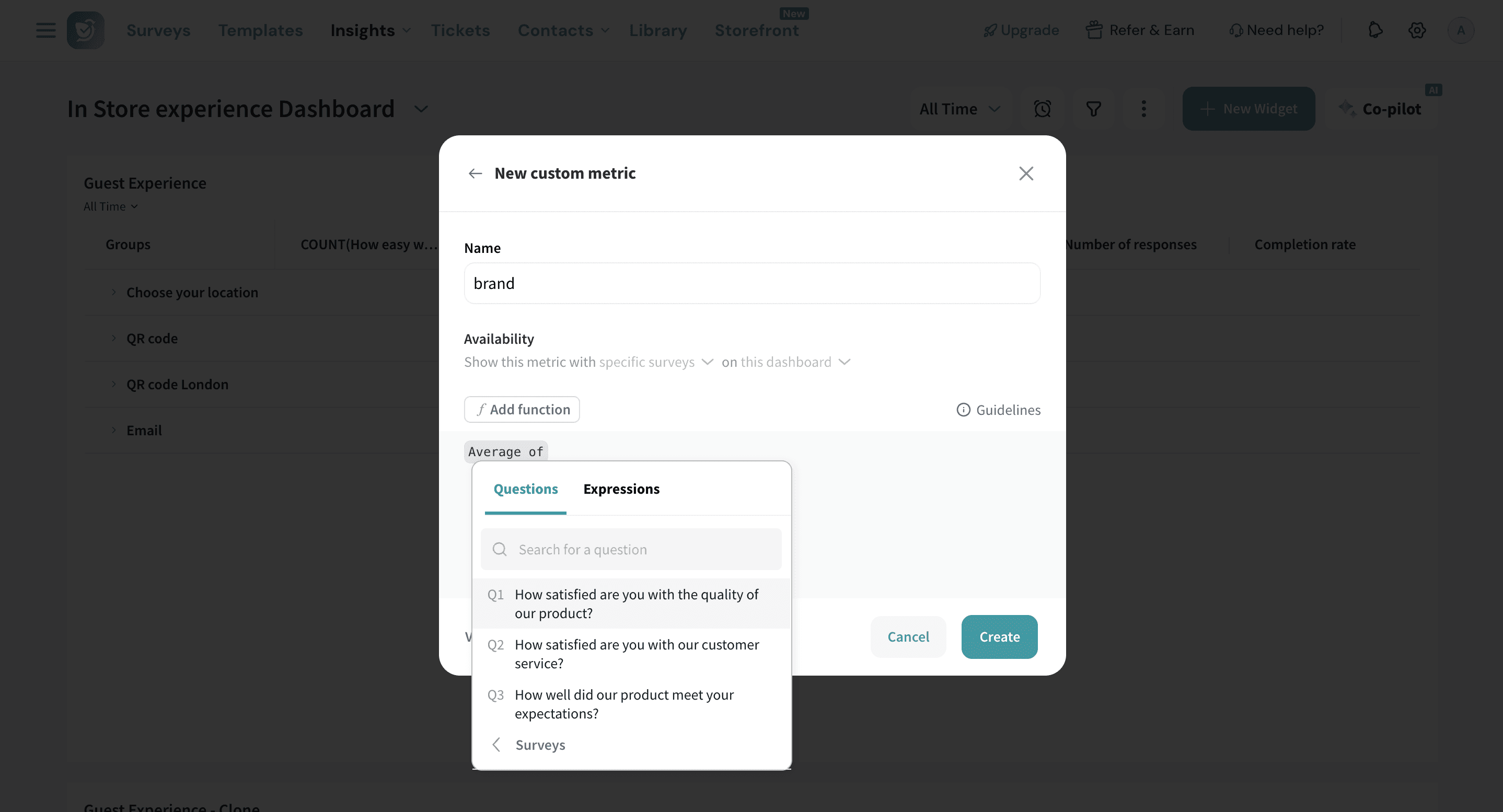
7. Select the option(s) to consider for the function according to your requirement. Click Done.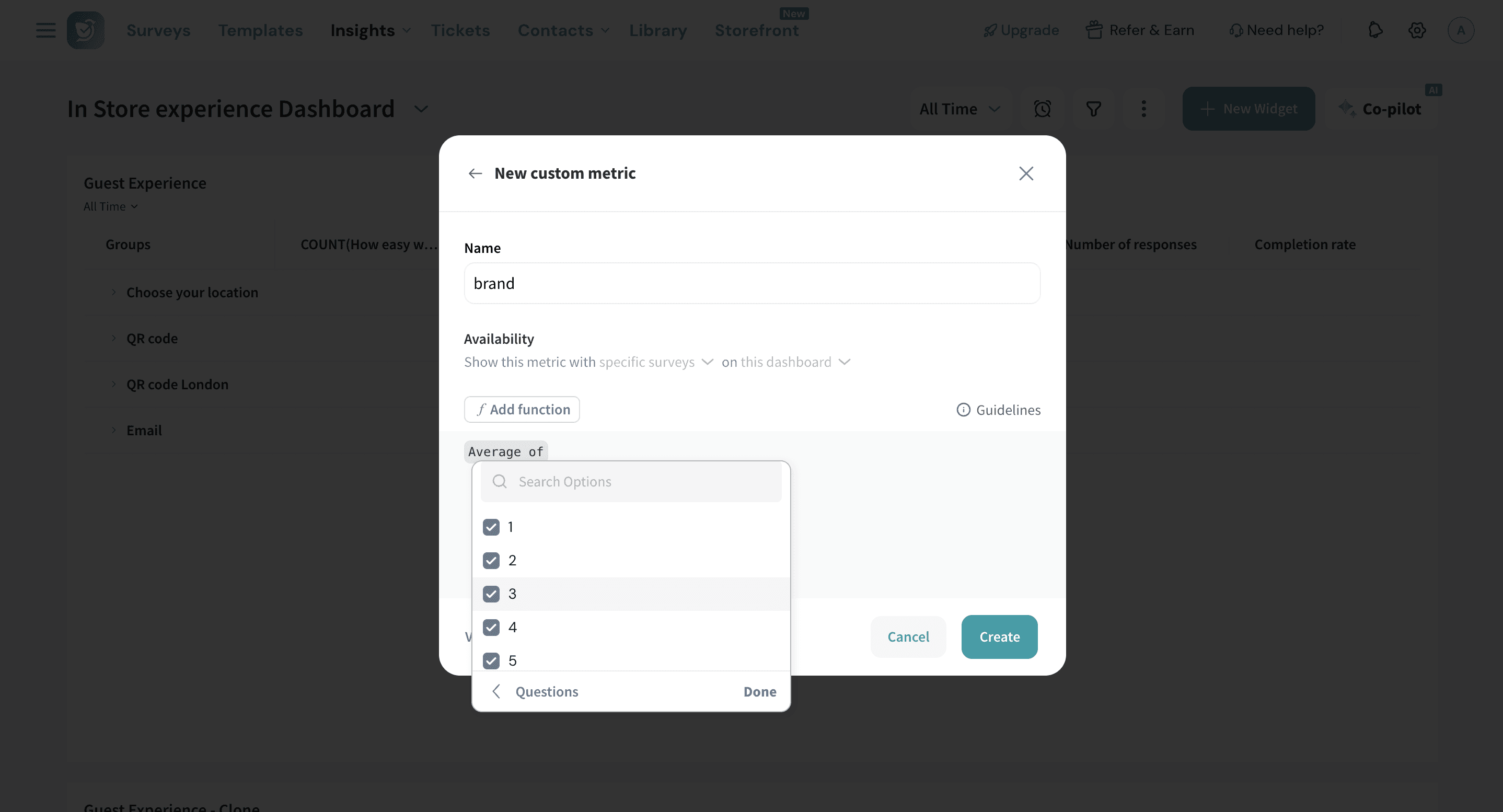
You’ll now see the function added. Proceed with adding an operator to continue building the formula if needed.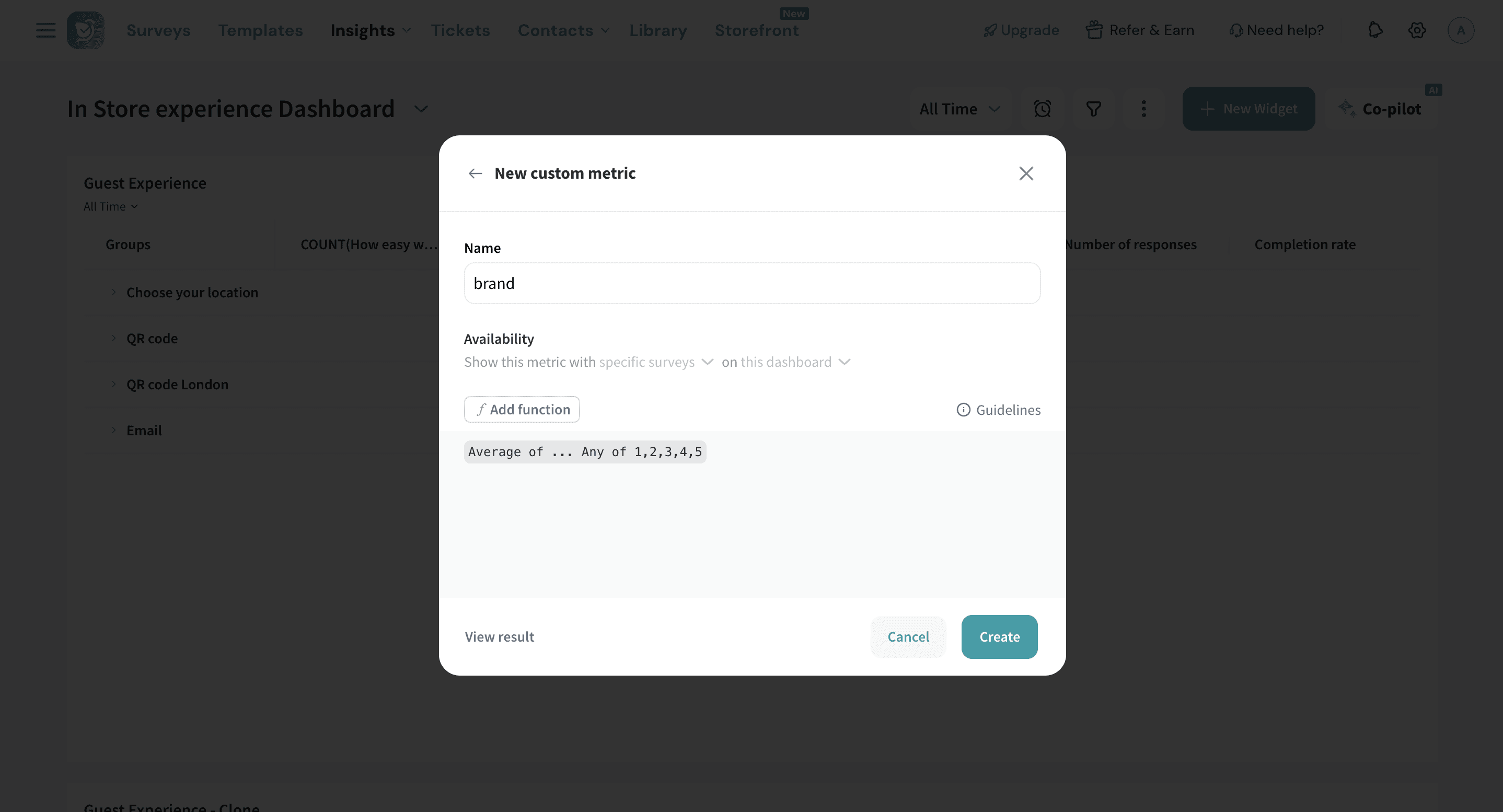
9. Type ‘f’ or click Add function to continue adding a function to build the formula.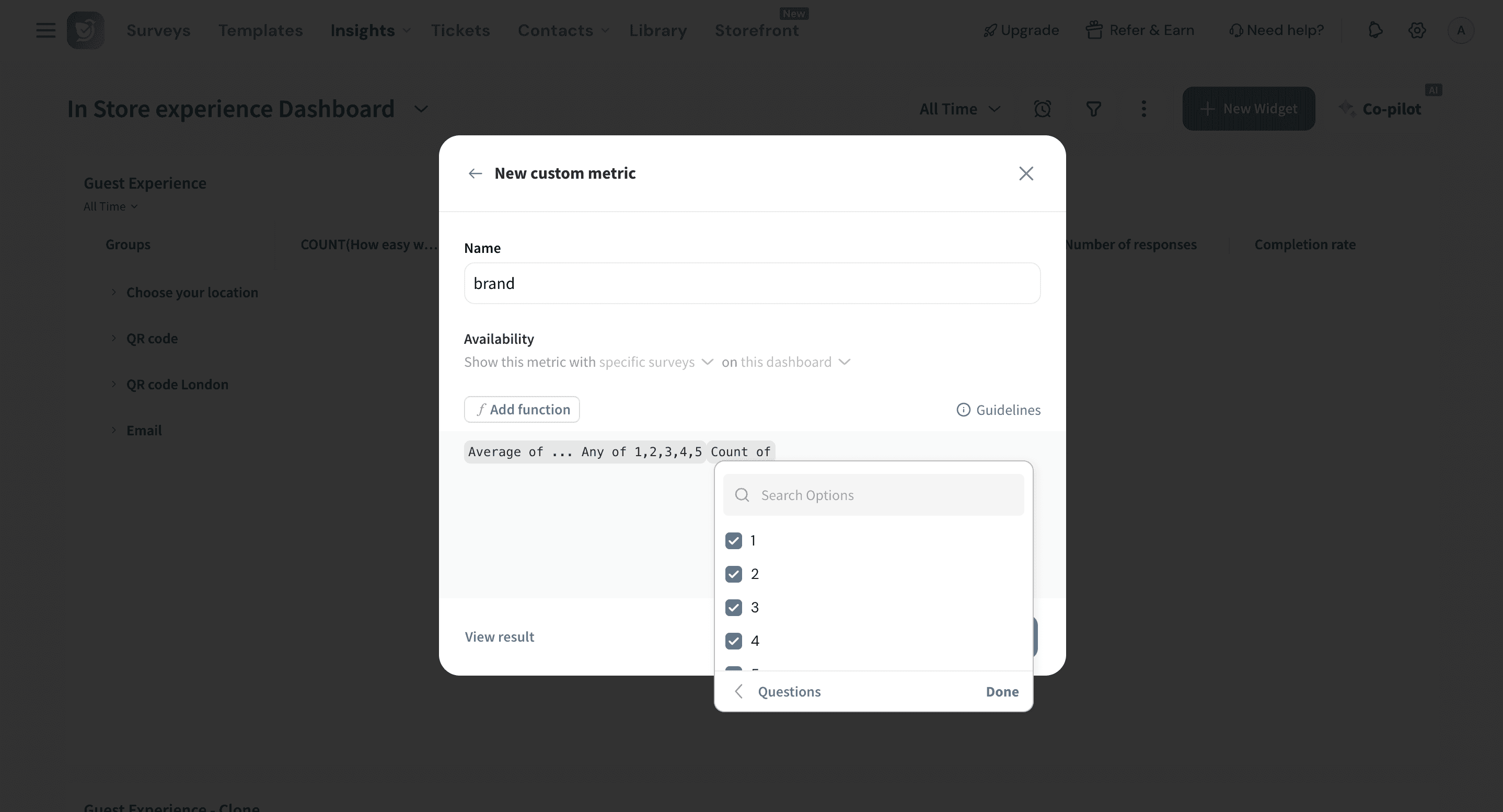
10. Once you complete building the formula, click Create.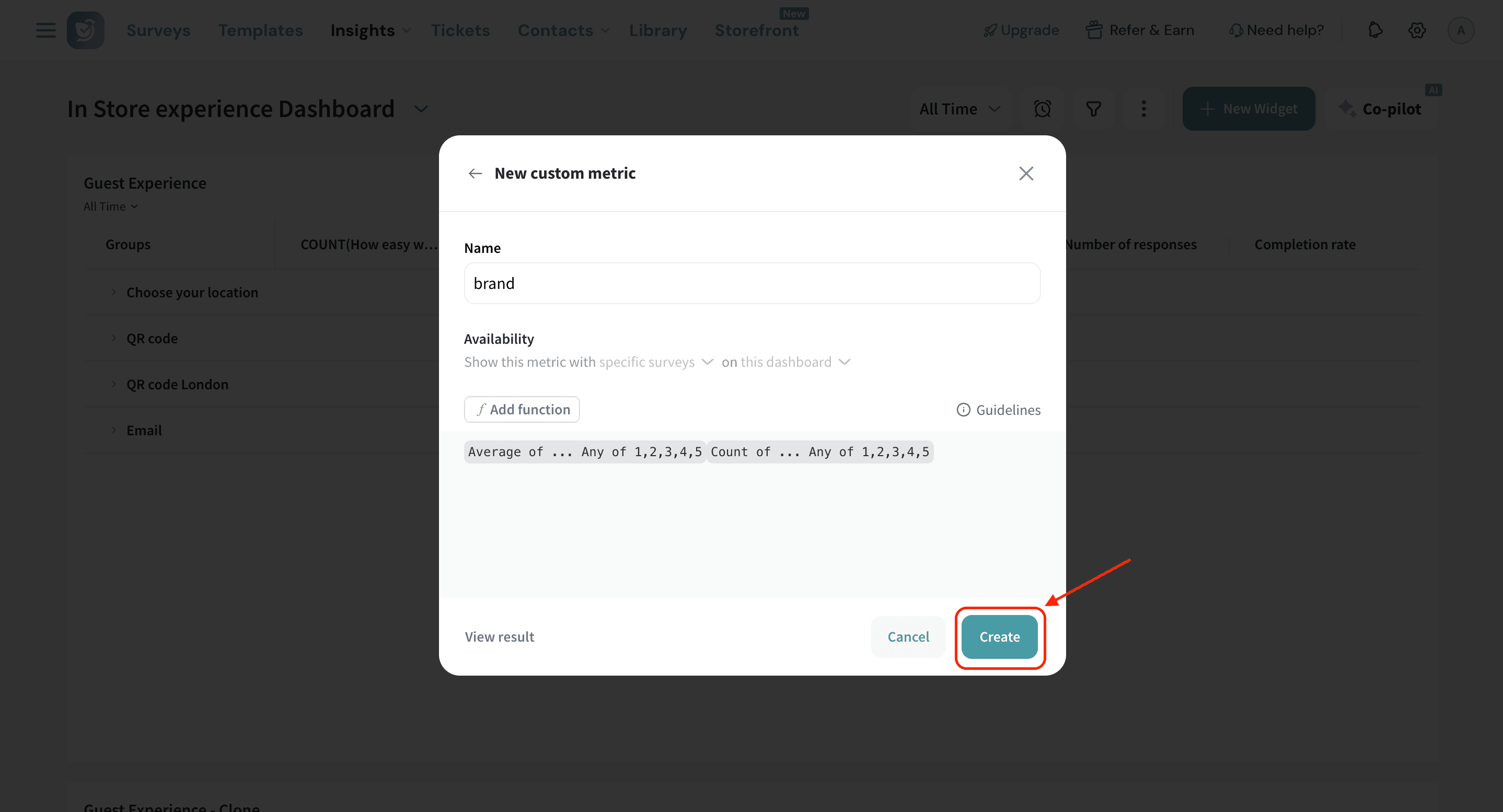
1. Choose one of the supported question types to build the metric.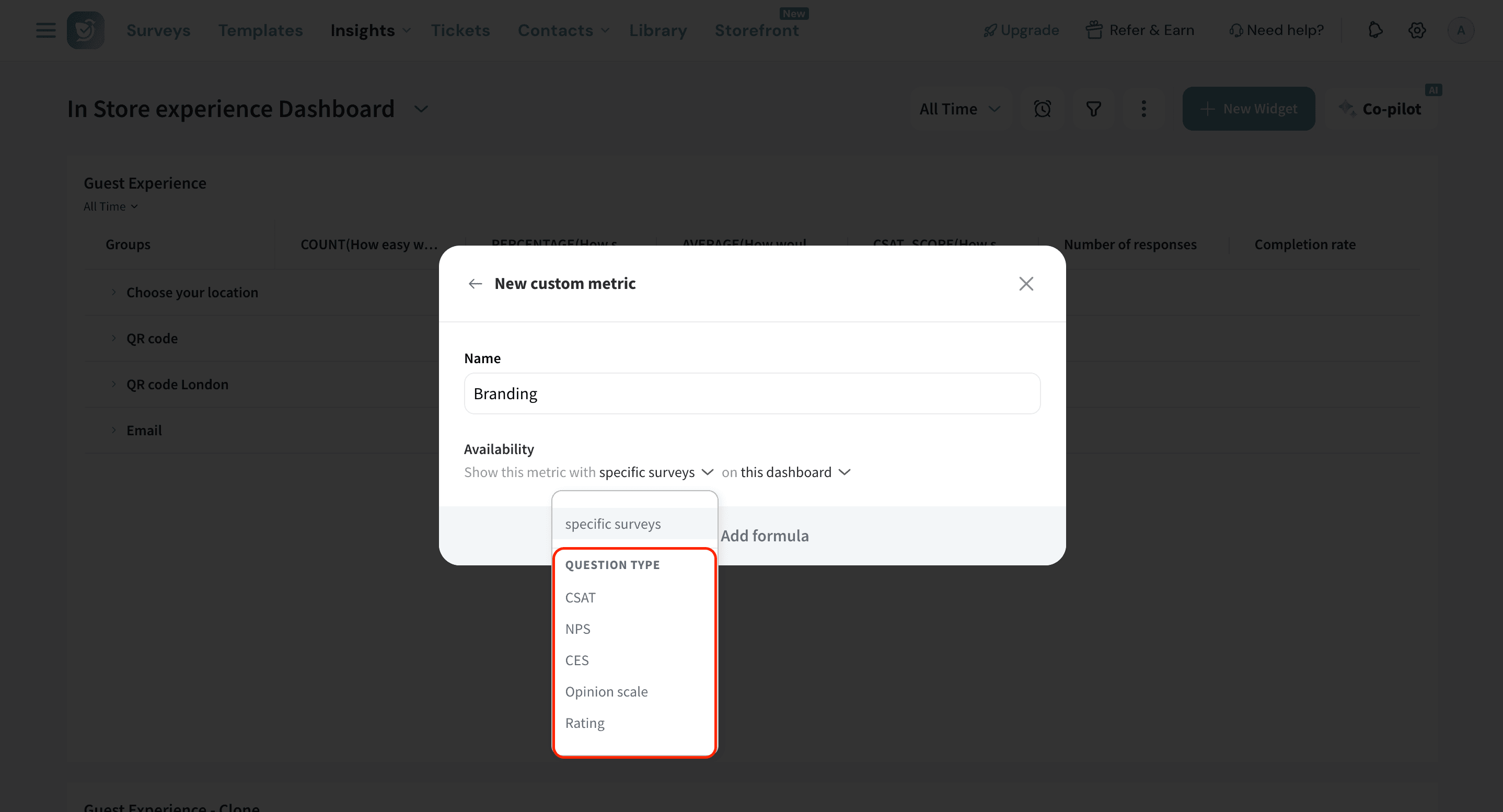
2. Set the availability of the custom metric to the current dashboard or have it accessible across all your dashboards.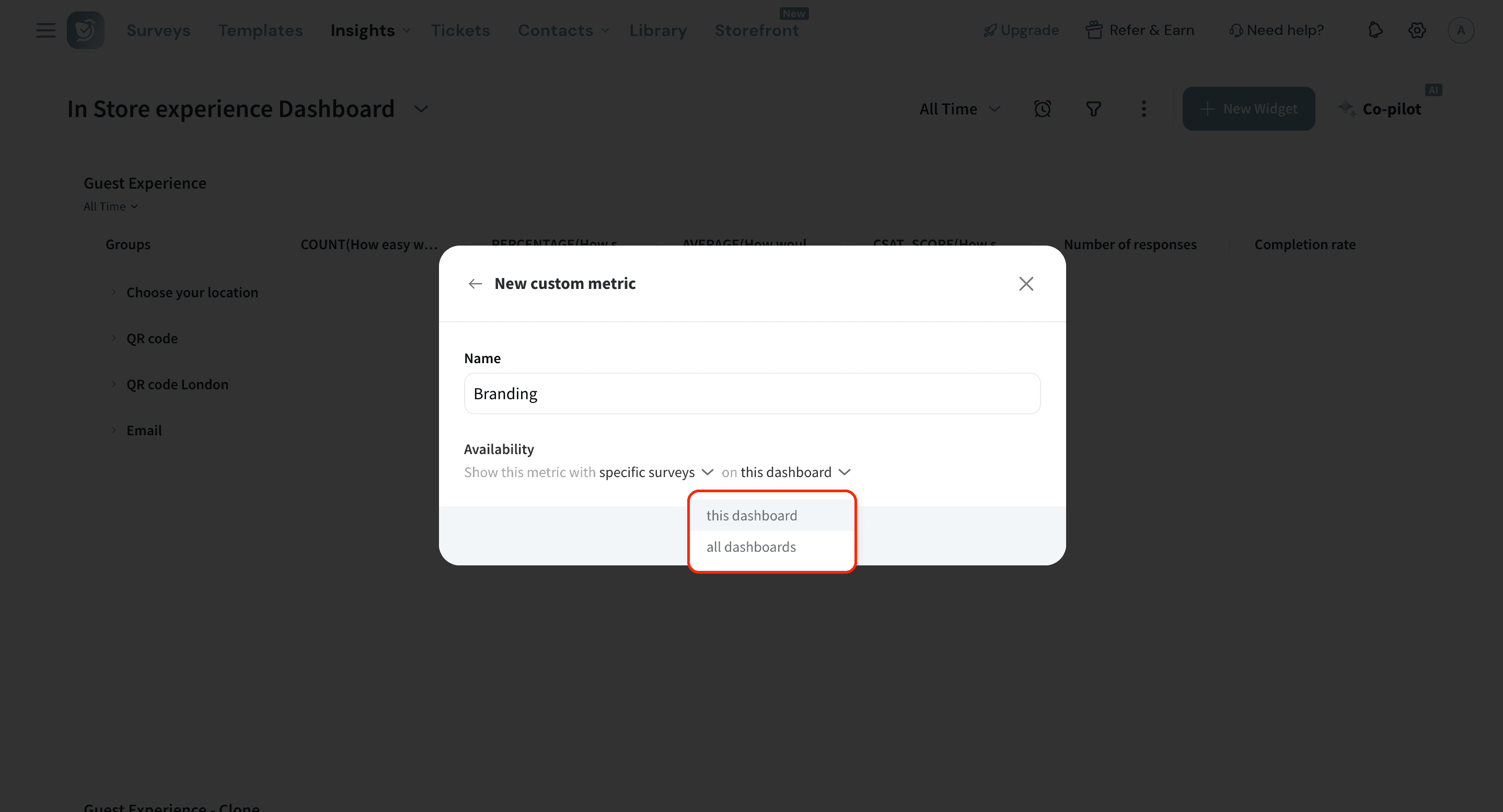
3. Click Add formula.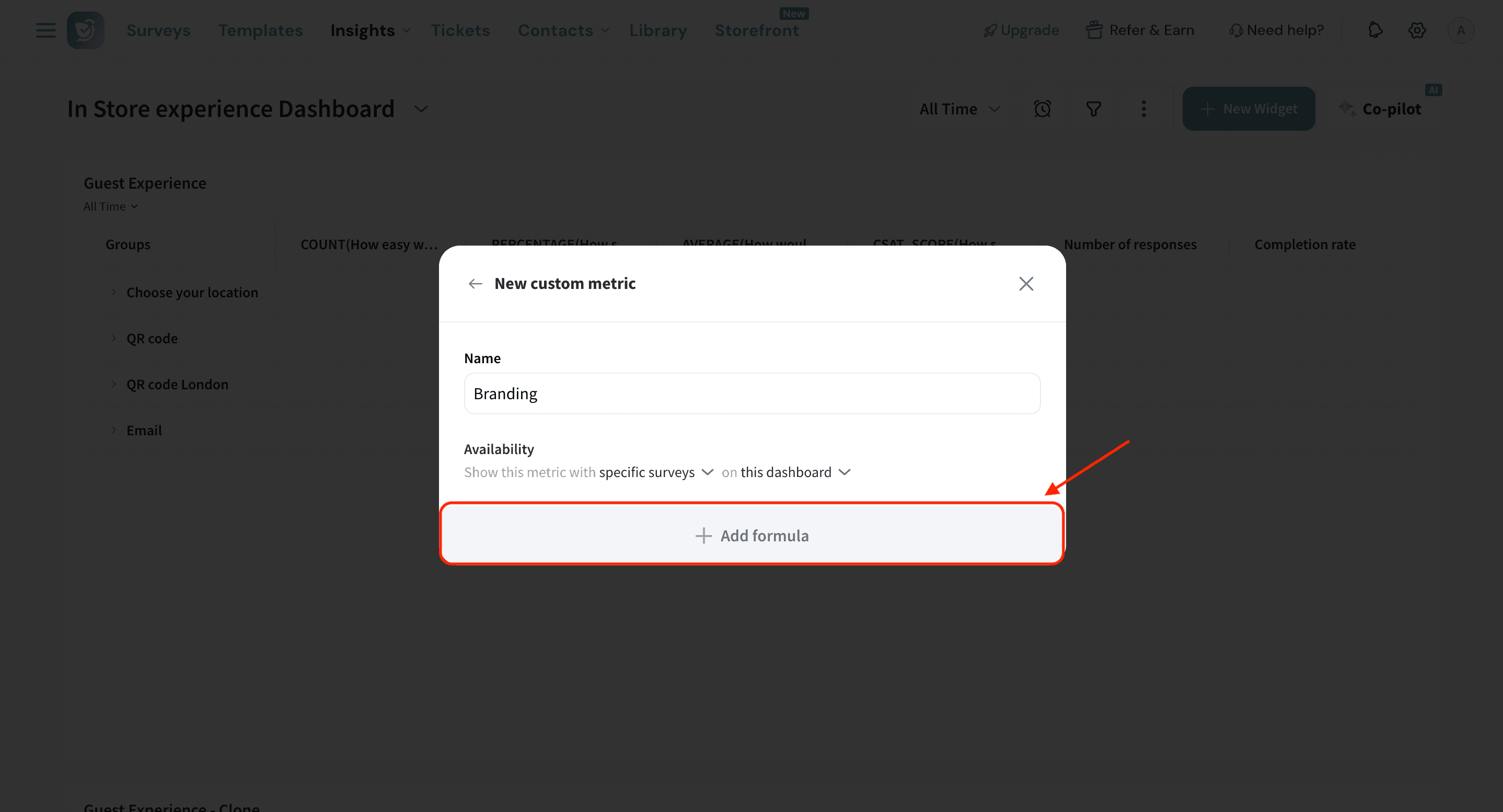
4. Type ‘f’ or click Add function to start building the formula for your custom metric.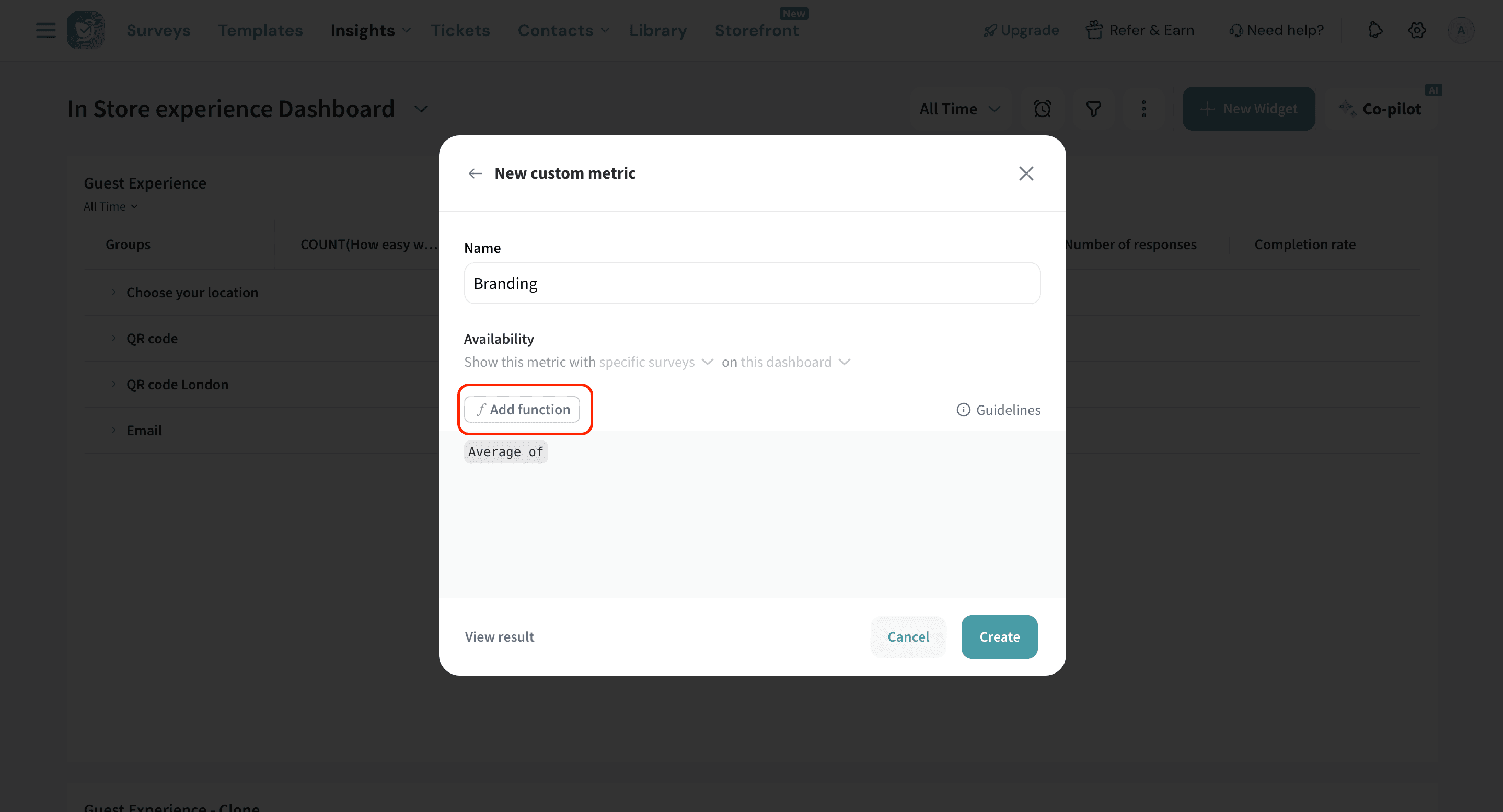
5. Choose one from the available functions to get started with building the formula.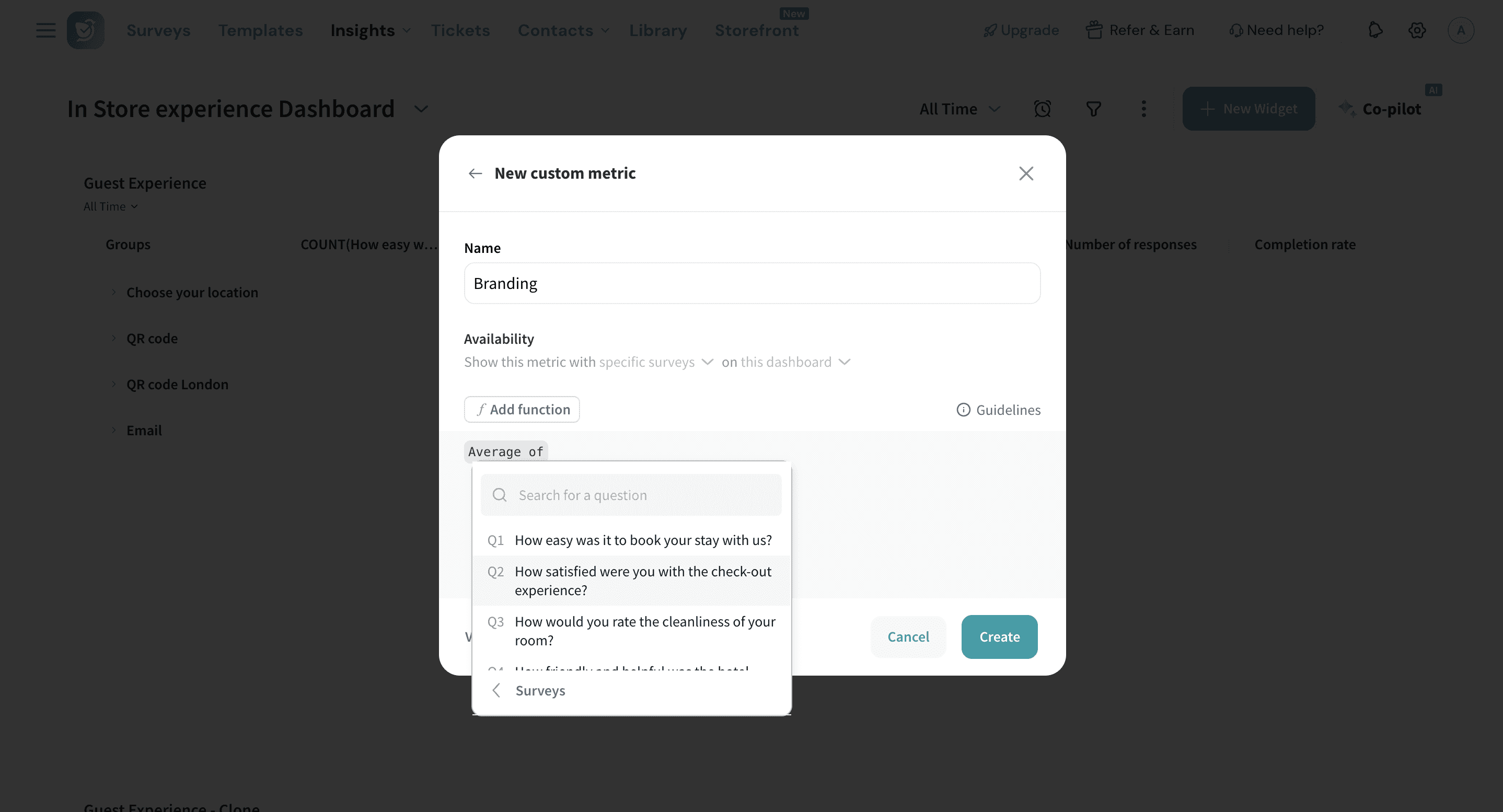
6. Select the option to be considered for the function and click Create.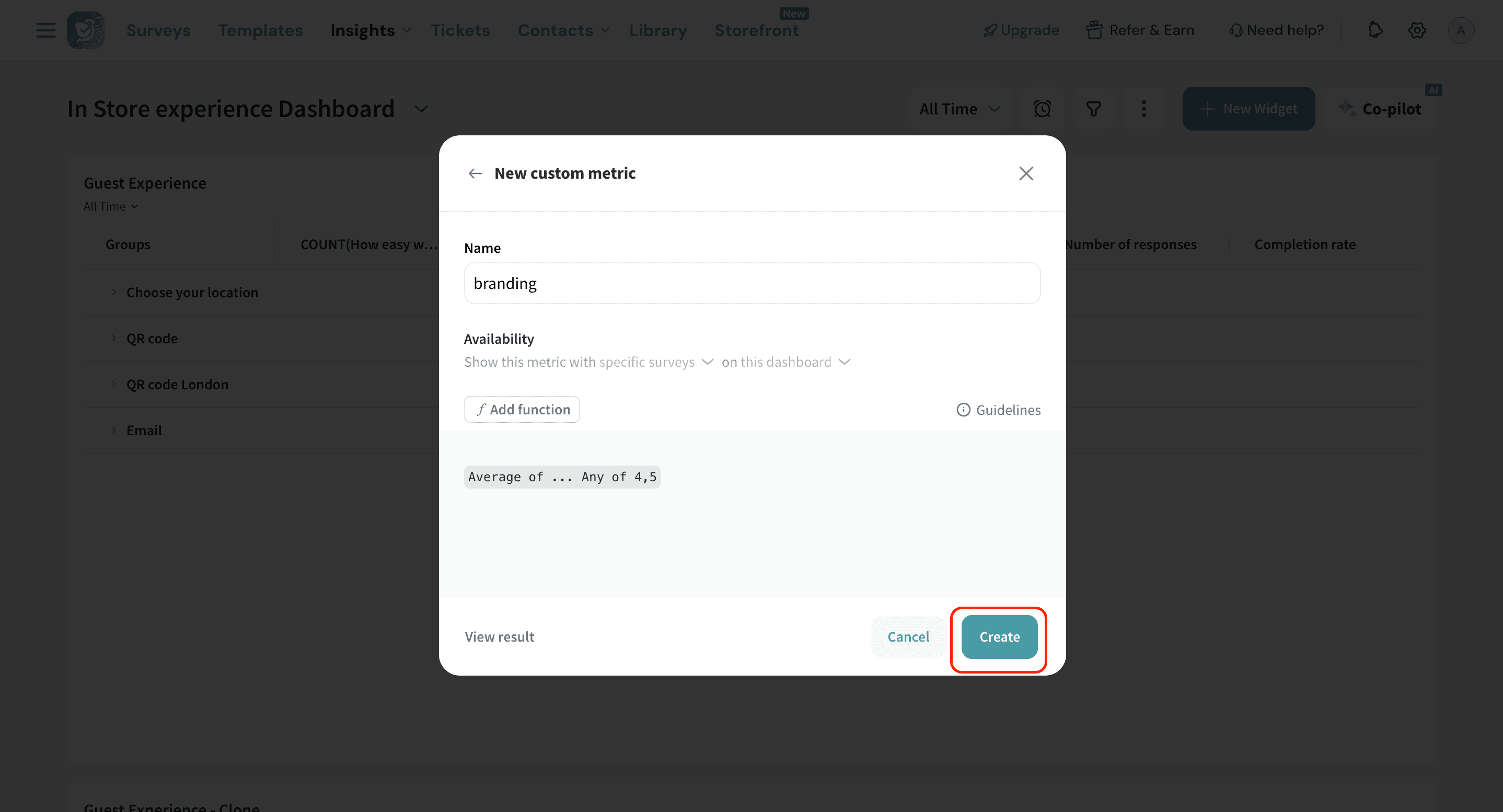
7. You’ll now see the function added. Proceed with adding an operator to continue building the formula if needed.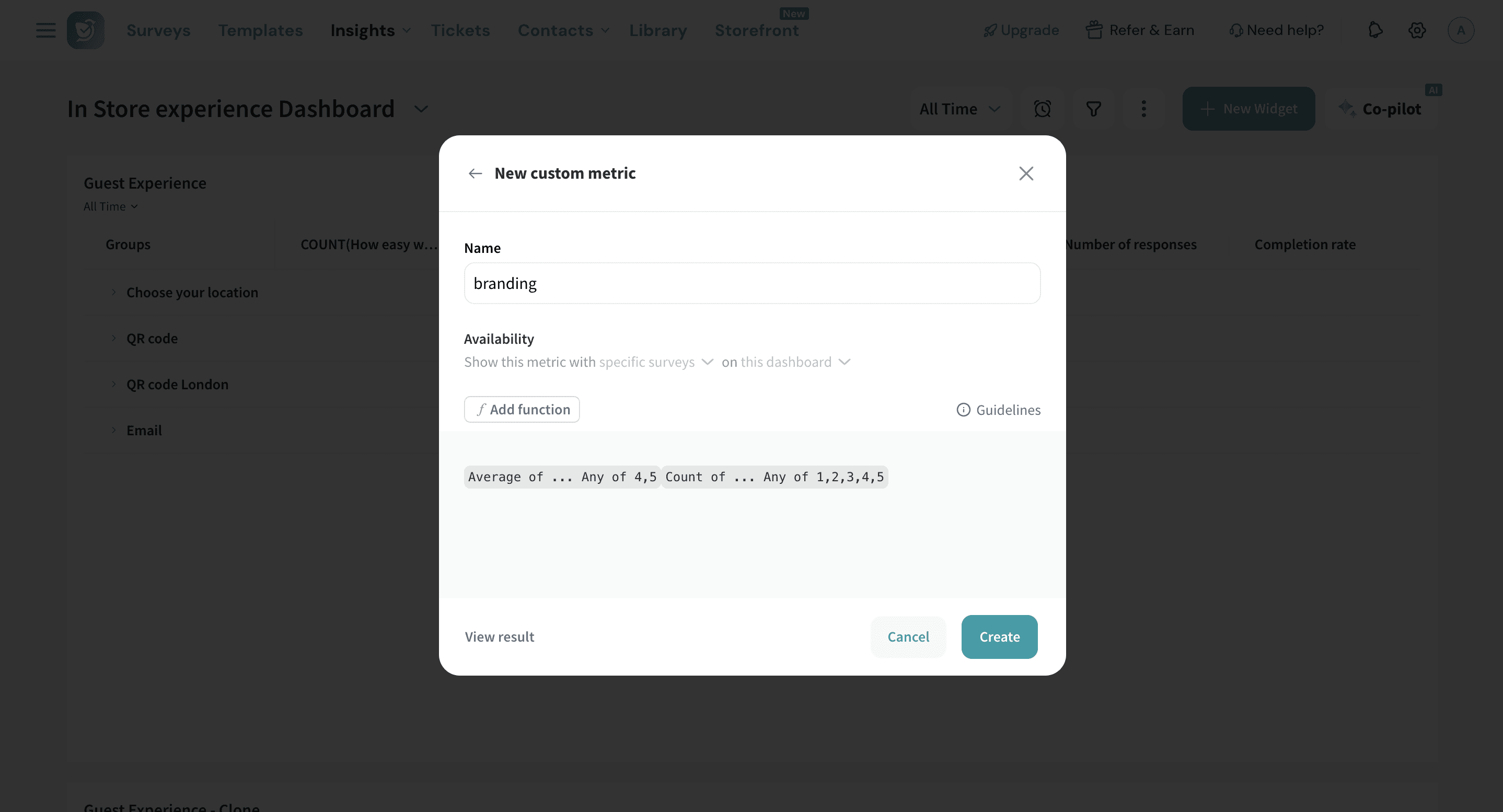
8. Type ‘f’ or click Add function to continue adding a function to build the formula.
9. Once you complete building the formula, click Create.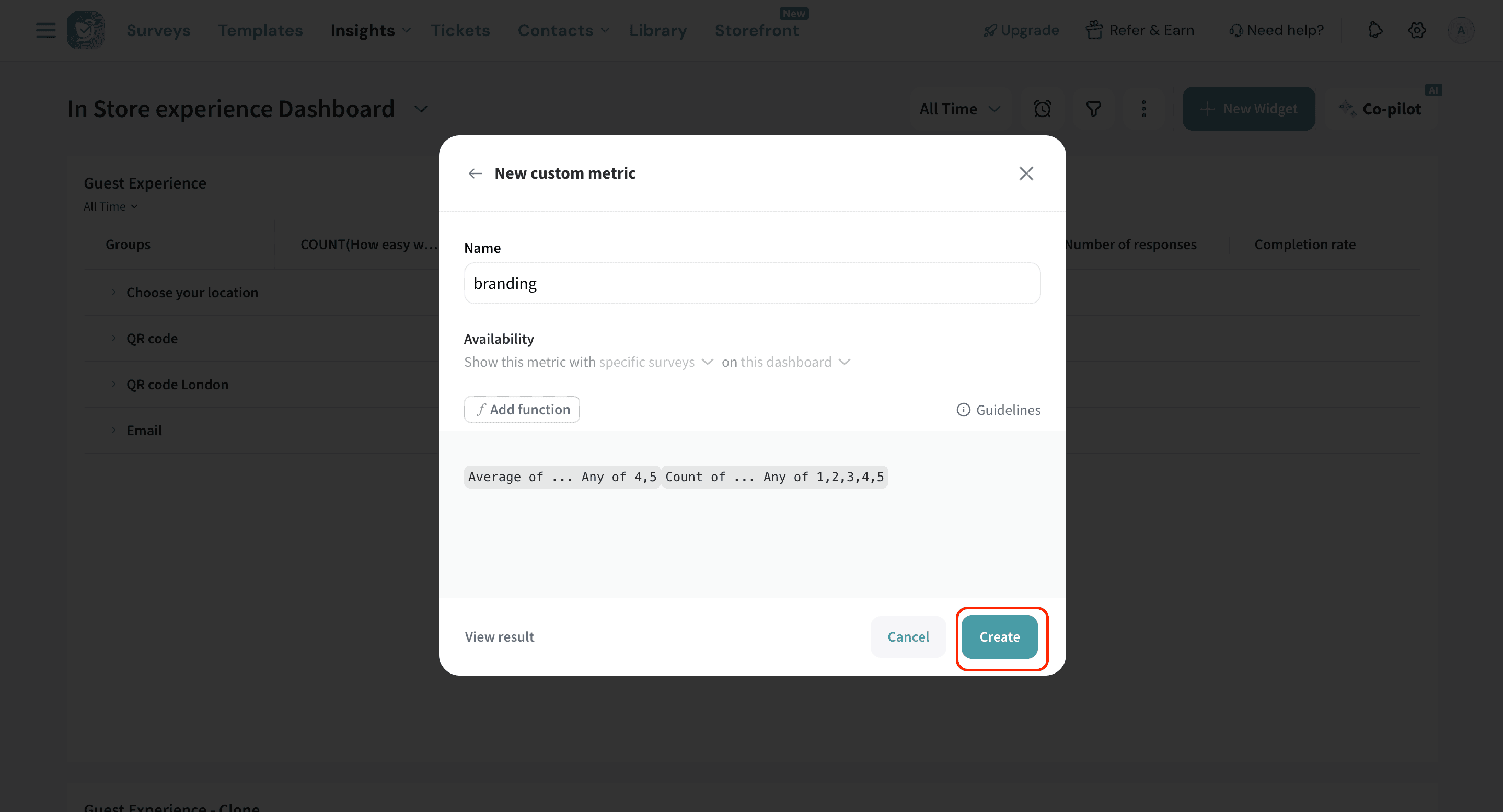
Your custom metric is all set! Now, you can use it in the supported widgets and monitor it on your dashboard.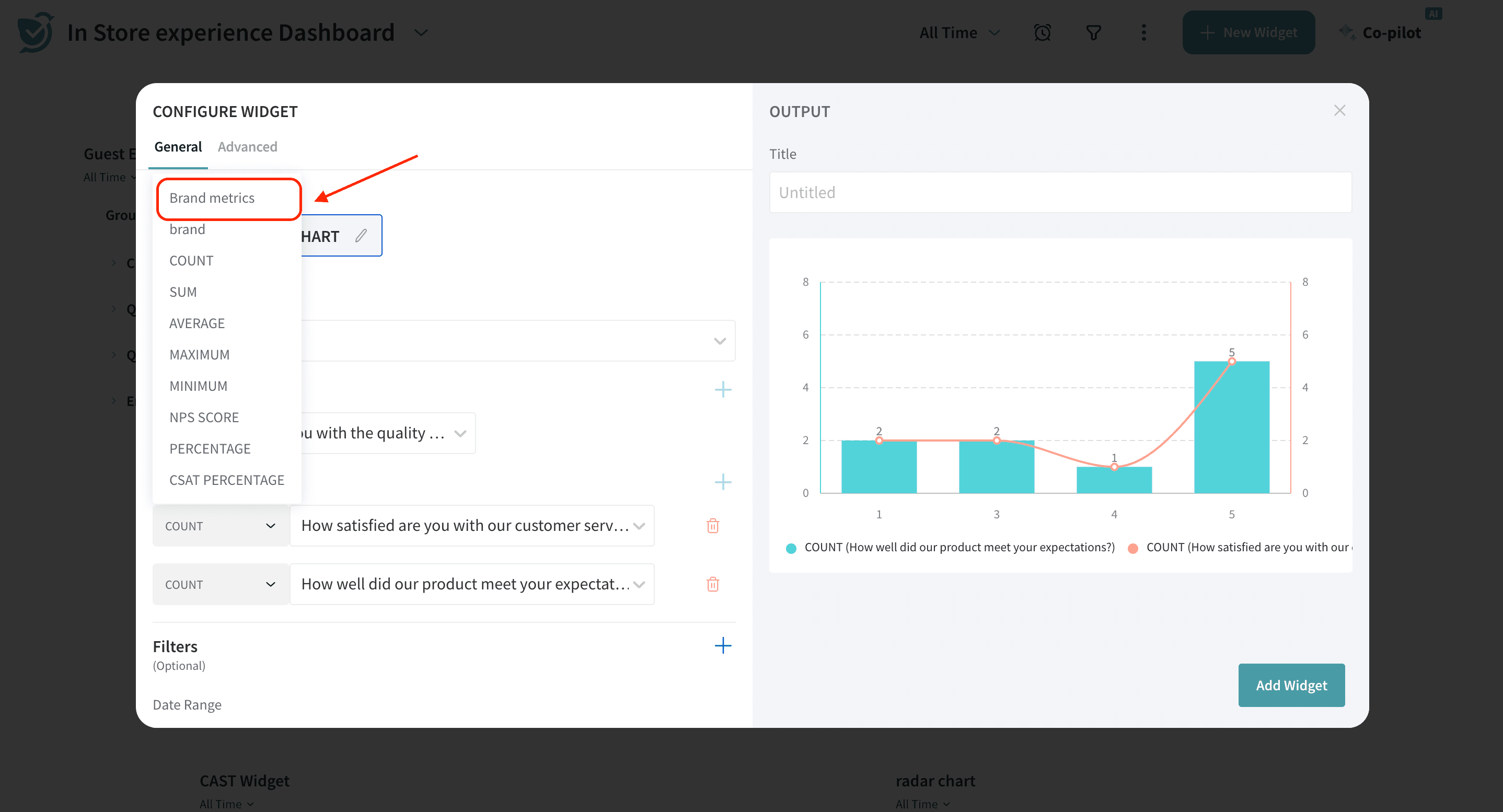
You can choose to edit or delete a customer metric by selecting the corresponding option.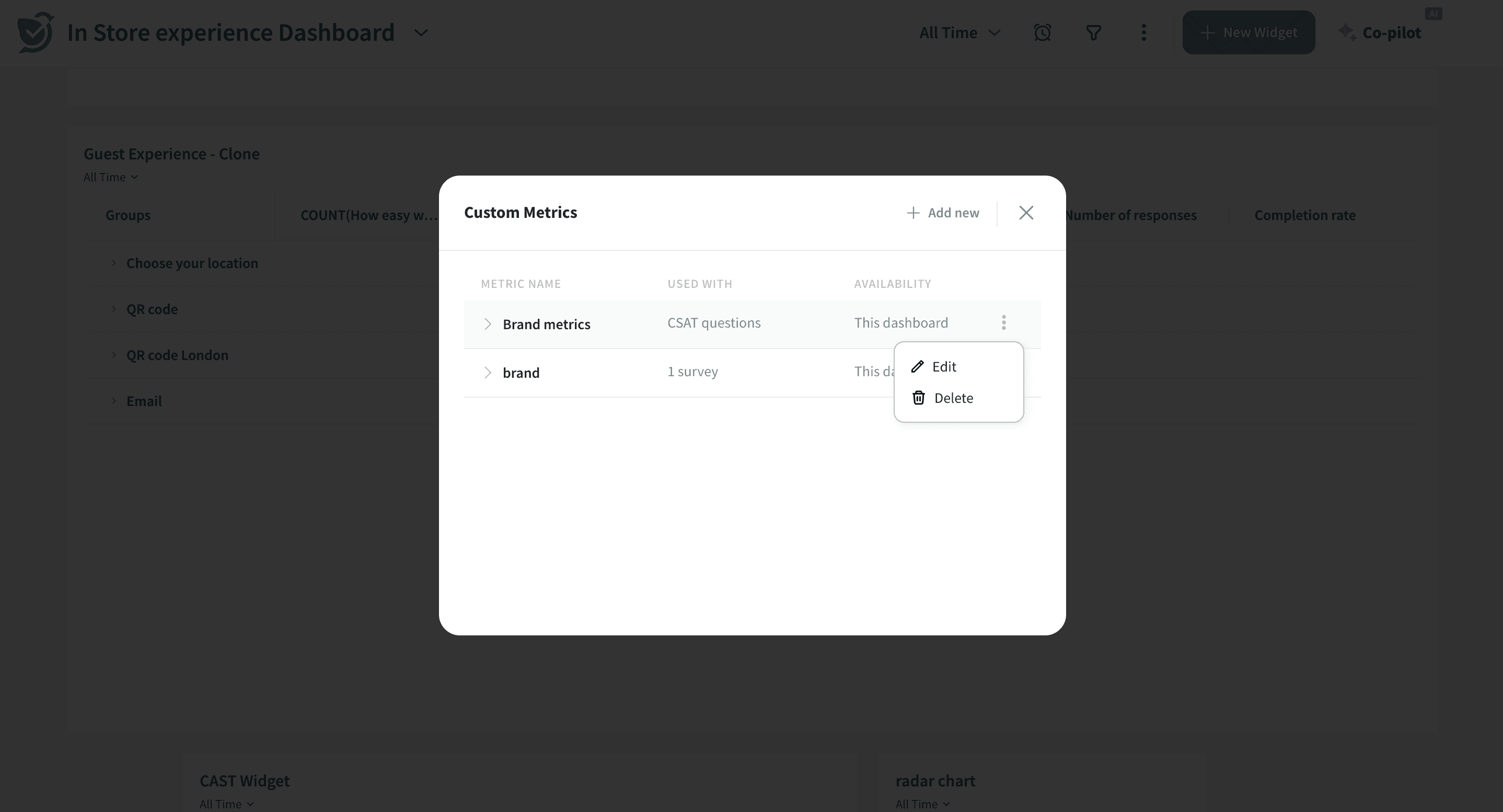
For Multiple Choice questions that allow respondents to select multiple answers, you can choose to have specific conditions. Let’s say you have a Multiple Choice question with options A, B, C, and D. Following are the conditions that you can apply,
Exact: The exact choices selected will be considered for the function. For example, assume you set the choices A and B for this condition. The function will consider only the responses that have exactly A and B selected.
All: All the choices selected will be considered for the function. For example, assume you set the choices A and B for this condition. The function will consider all responses that have A and B selected.
Any: Any one choice if selected will be considered for the function. For example, assume you set the choices A and B for this condition. The function will consider responses that have either A or B selected.
Feel free to reach out to our community if you have any questions.
Powered By SparrowDesk
